There Are Rivers in the Sky by Elif Shafak is a richly layered contemporary novel that explores water, memory, identity, empire, migration and the power of storytelling. The book moves across centuries and continents, raising questions that reach far beyond a single narrative.
The thread running through the novel I particularly love, which forms the basis of this article, is the preservation of stories and why they, and the voices that tell them, matter in the world.
Why voices matter in literature
Stories carry voices across time. Through them, lives are remembered, cultures survive and histories remain visible, and for women in particular, storytelling has often been one of the few ways to preserve truth when power, conflict or political narratives attempt to erase lived experience. And fiction can play a powerful role here, because a novel allows you to encounter human realities that statistics, news reports or social media snippets can never fully convey.
Through character and narrative, literature can bring us closer to the emotional truth of events and the experiences of real people; despite the reimagining of fictional lives, fiction is often packed with historical facts.
Reading There Are Rivers in the Sky left me thinking deeply about voice. Who is heard? Who is remembered? Whose stories risk being lost? (There’s a link to a wonderful interview with the author at the end of this article that delves deeper into this topic – and others).
Through Narin’s story (one of the main characters), the fragility of Yazidi cultural memory becomes clear, as a community built on oral tradition faces the devastation of genocide and displacement. The thread of the Epic of Gilgamesh and the recovery of its fragmented tablets reminds us how much of human history survives only through the painstaking discovery of lost voices from the past. And through the character, Zaleekhah, we discover her uncle consciously distancing himself from his life in Turkey, showing that forgetting can also be a choice – a way of surviving by leaving certain histories behind.
Together, these story strands highlight how fragile memory can be and how essential it is that stories continue to be told.
Elif Shafak uses water as a brilliant metaphor that runs quietly through the entire novel; rivers move across landscapes just as stories move across generations, and they carry memory forward. When either rivers or voices are buried, something essential risks disappearing from our collective awareness.
Water, the feminine and the ethics of care
Water also flows through the novel as both symbol and structure as it links characters, landscapes and centuries.
Shafak’s storytelling suggests that the health of water and the health of society are intertwined. Cultures rooted in care often treat rivers as life-giving forces, yet when extraction, exploitation or industrial ambition dominate, rivers are diverted, polluted or buried beneath development.
This devastation also carries an association with the feminine. As Sharon Blackie puts it in her fabulous bestseller If Women Rose Rooted, ‘The suppression of the feminine has been accompanied […] by the purposeful destruction of natural ecosystems.’ The very term ‘Mother Earth’ is intrinsic to the idea that, ‘We are not separate from this Earth; we are a part of it.’
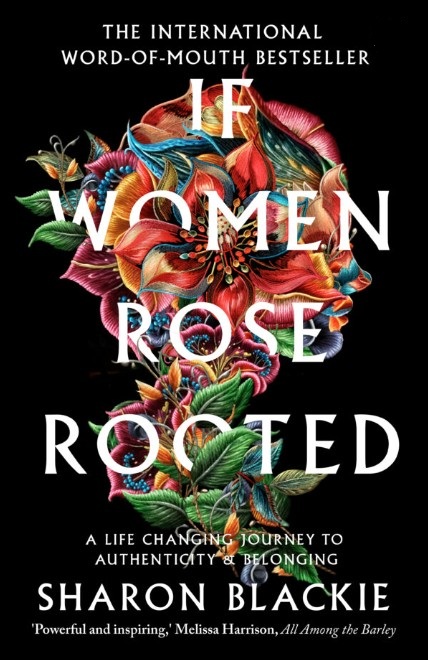
If Women Rose Rooted September Publishing
In her talk with Mary Beard about the book at the British Museum, Shafak explains that across many parts of the world, women collect water daily, walking long distances to wells, springs or rivers before carrying it home for their families. Their relationship with water is practical and intimate with rivers and wells shaping the rhythm of their everyday life.
In many of these same communities, women also serve as keepers of stories, traditions and oral histories, just as Narin’s Grandmother does in the book. Water and voice therefore become closely connected. Both sustain life. Both travel through generations. It becomes a site of struggle when control over resources determines survival, and Shafak presents these realities with sensitivity and depth, reminding you that environmental destruction rarely exists in isolation. It affects culture, history and identity in a fell swoop.
The Yazidi community and the importance of bearing witness
The novel includes the real-life suffering of the Yazidi people. Their wells were poisoned, the murder of elders was plotted to erase their oral history, and men and boys were slaughtered. In 2014, thousands of women and girls from this minority community were then taken during violent conflict and forced into sexual slavery. Around 3,000 remain missing to this day.
Their absence echoes through the narrative as part of a wider story about erased lives and suppressed histories. The suffering of these communities raises urgent questions about memory and recognition, and literature plays an important role in this context.
Bearing witness through storytelling becomes an act of remembrance.
Fluid identity and the idea of shared humanity
Shafak also introduces a compelling idea about identity itself. Rather than something fixed or rigid, identity in the novel becomes fluid. It resembles water.
A person can belong to more than one place locally and geographically, and perspective can shift over time, as a child, a wife, a mother or a grandmother. As an orphan or divorcee. Identity forms and reforms through movements and experiences rather than remaining fixed by strict boundaries.
This perspective invites you to imagine a broader sense of citizenship and that human belonging can expand beyond territory to embrace shared humanity. In this way, storytelling becomes a quiet act of recognition, allowing us to see ourselves and others as part of a shared and ever-changing human landscape.
The importance of voice
Through stories, we begin to understand lives that may be very different from our own. And when a wide range of voices are heard – across cultures, communities and generations – our collective understanding of the world becomes richer, more truthful and more compassionate.
A novel allows you to step inside another life, to feel the emotional reality behind histories that might otherwise remain distant or abstract. It can also illuminate overlooked experiences, preserve fragile memories and bring hidden histories into the light.
For many people throughout time, however, the opportunity to have their voices recorded has been very limited. Women’s experiences in particular have often existed outside official historical records; instead, their lives have been carried through storytelling, letters, conversations and the passing down of memory through families and communities.
When those stories are told, in fiction, memoir or oral history, they expand the narrative of what history really looks like. They restore presence to voices that have too often been overlooked.
That’s why voice matters so deeply.
If you have a story to tell, it deserves to be heard.
As Maya Angelou once wrote: ‘There is no greater agony than bearing an untold story inside you.’
Further reading and discussion of the book:
There are Rivers in the Sky by Elif Shafak
BBC article: Who, What, Why: Who are the Yazidis?
Elif Shafak in conversation with Mary Beard at the British Museum
-
Nervous about designing your book cover? Learn how to collaborate with a designer, write a great brief, and give effective feedback so your theme shines through.
Don't wait until everything feels polished before seeking support. Developmental editing sits much earlier in the process, meeting your story where it’s open to possibility.

Nervous about designing your book cover? Learn how to collaborate with a designer, write a great brief, and give effective feedback so your theme shines through.